October 10, 2026


Walk into almost any rowing club and you will hear the question within your first week: sweep or scull? Both use the same stroke and the same vocabulary, but they ask different things of your balance, your body and your patience. Choosing one first can shape how quickly you fall in love with the sport—or how frustrated you feel in the first month. The good news is that neither path is wasted. The better news is that you can choose deliberately based on your body, your goals, your access to equipment, and the kind of feedback you need to improve.
In sweep rowing, each rower handles one oar. If you row on port, your oar extends to the left side of the boat; if you row on starboard, it extends to the right. The common sweep boats are the pair, the four, and the eight. In sculling, each rower handles two oars, one in each hand. The common sculling boats are the single, the double, the quad, and the octuple. The obvious difference is the number of oars. The deeper difference is how the boat stays set and how you receive feedback.
Sweep rowing depends on symmetry across a crew. Your balance is partly borrowed from the people beside you. Sculling depends on symmetry within your own body. There is no opposite-side rower to hide a handle that is too high or a drive that is too short. If your left hand is late, the boat knows. If your right hand dips, you know immediately.
“Sweep teaches you to be part of a machine; sculling teaches you to be the machine.”
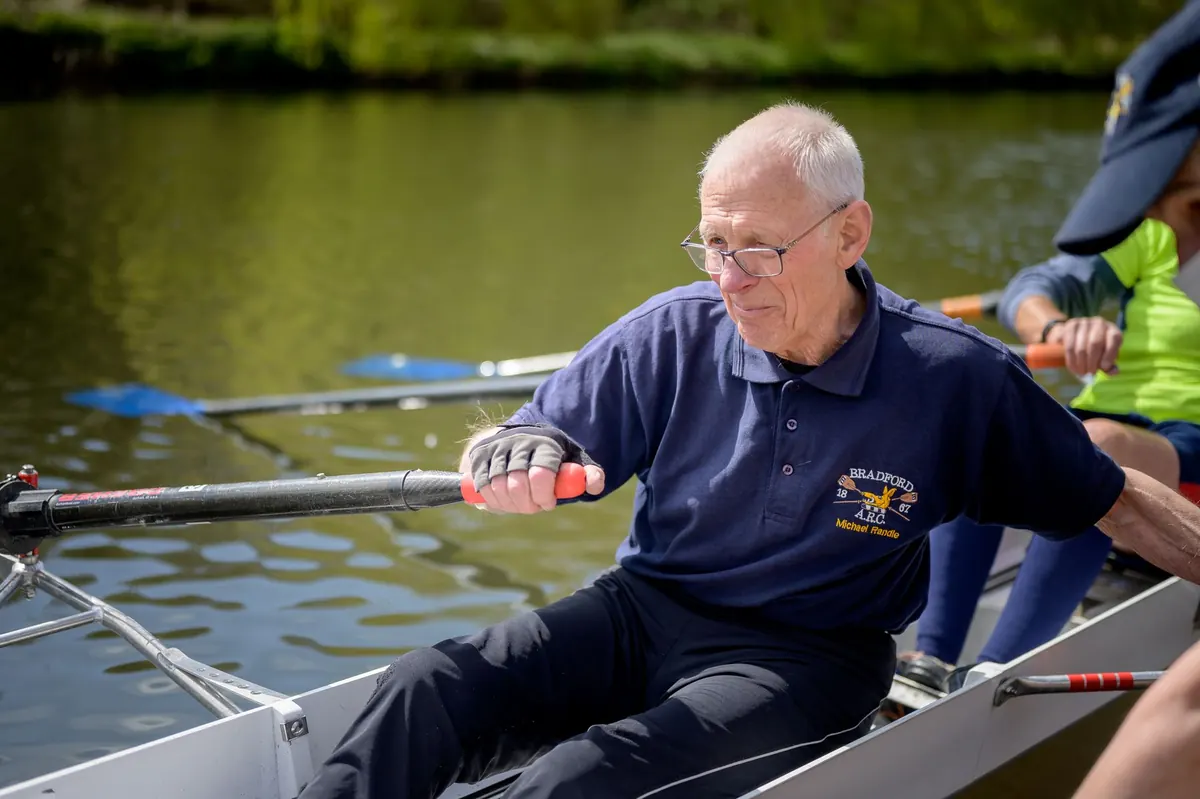
Most beginners meet sweep rowing in an eight. That makes sense. An eight is long, stable, and coxed, which means a novice crew can be noisy, imperfect, and still moving. The coach can watch from the launch, the coxswain can steer and motivate, and the rowers can focus on one or two technical cues at a time. You learn to feel the boat shift under you when someone is early or late. You learn to match a stroke rather than invent one.
Sweep has hidden demands, though. One-oar rowing can create asymmetry. A port rower may develop different strength and flexibility than a starboard rower. It is also easy to hide poor technique in a big boat. If seven other people are pulling, you can be late, rushed, or tense and still move. That can delay your technical development unless a coach gives you specific individual feedback.
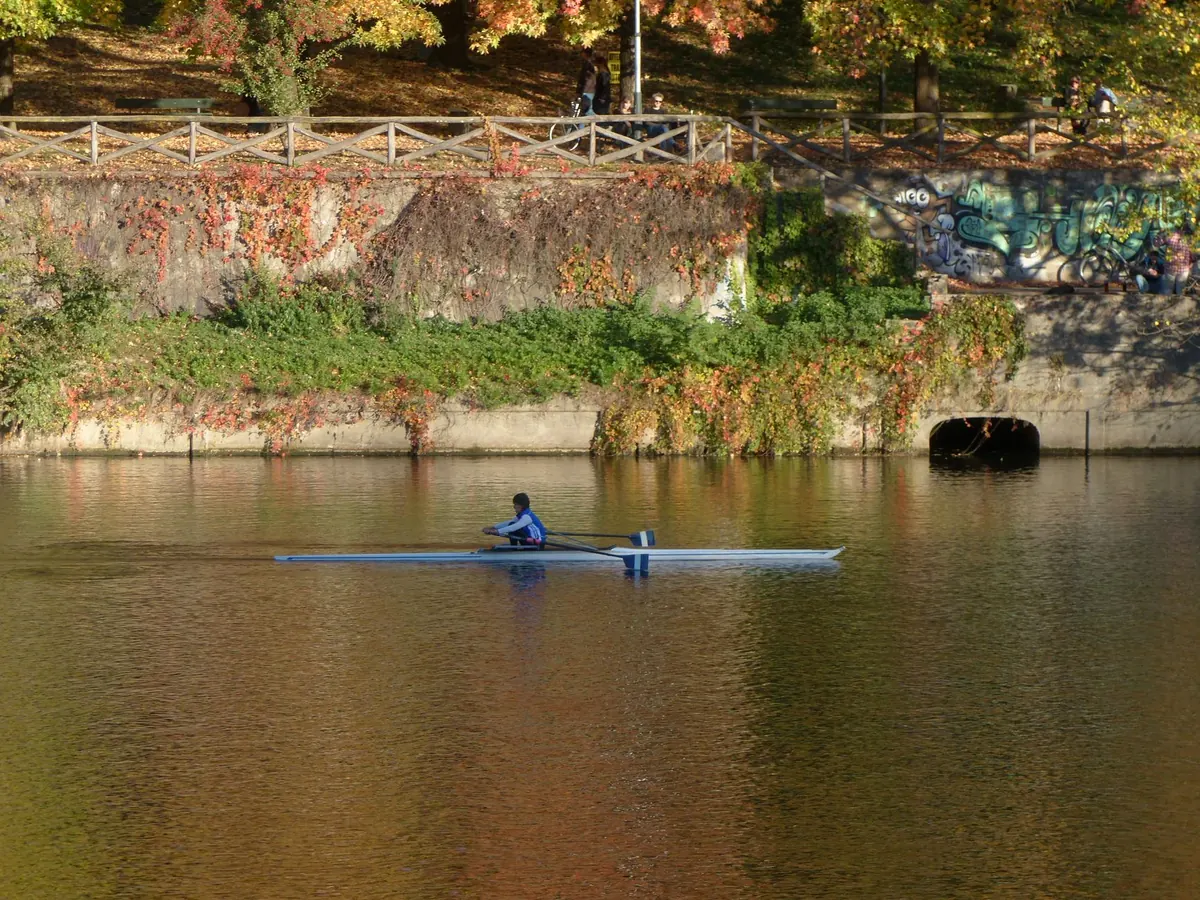
Sculling is often described as the purer form of rowing. That does not mean it is better; it means the feedback loop is tighter. With two oars, you must set the boat yourself. You must control your handle heights, your body swing, and your release with far less margin for error. The single scull is the ultimate teacher because it exaggerates every flaw. It is also the ultimate freedom: no crew, no coxswain, no schedule negotiation. Just you, the boat, and the water.
The downside is the learning curve. Your first sculling session may involve more swimming than rowing. A narrow single can feel like a tightrope. Wind and chop are less forgiving. You may spend weeks just learning to sit the boat before you take a full stroke. For some rowers, that challenge is addictive. For others, it is a fast route to frustration.
Think of the difference this way. In a sweep eight, feedback is collective. The boat goes faster when everyone connects, but it is hard to know exactly how much of that speed came from you. In a single scull, feedback is personal. The boat goes faster when you connect, and it slows down when you rush, lunge, or grip too hard. That immediate cause and effect can accelerate learning—if you have the patience to tolerate repeated failure.
Your background matters, too. Gymnasts, swimmers, and martial artists often take to sculling balance quickly because they are used to body awareness in unstable positions. Team-sport athletes and runners often enjoy sweep rowing because they already understand pacing, grit, and collective effort. Neither background locks you into one style. They simply suggest where you might feel more comfortable on day one.
There is no universal answer. But you can make a smart choice by asking what you want from the first season.
If you are an adult beginner with limited time, sculling can be more efficient because you can row when no crew is available. If you are a junior joining a school program, sweep may be the default because that is where the team boats and coaching are. If you are returning to the sport after years away, start where your club has the best coaching ratio and the safest water.
Many coaches prefer beginners to start in sweep boats, especially eights, because the boat is stable and the group dynamic keeps novices engaged. Other coaches, particularly at sculling-focused clubs, start beginners in wide singles or doubles because they want athletes to develop boat feel from day one. Neither approach is wrong. The best first style is the one that keeps you coming back long enough to build fitness, water confidence, and technical habits.
One useful compromise is to learn sweep in a crew for a season, then take a sculling course to sharpen your individual feel. Or do the reverse: start in a single or double, then join a sweep crew once you can set a boat. The transfer goes both ways. A sweep rower who learns to scull often becomes more aware of handle heights and connection. A sculler who learns sweep often becomes better at matching a crew and applying power in a team context.
Sweep or scull? The question feels permanent, but it is not. Your first style is a starting point, not a life sentence. Sweep offers community, power, and the thrill of eight oars moving as one. Sculling offers balance, independence, and the quiet satisfaction of a single boat gliding cleanly. If you can, try both before deciding. If you cannot, pick the one your club can teach safely and consistently. The stroke, the vocabulary, and the joy of a boat moving well are waiting on either side.
Photo: Luca Gastaldo / Pexels

All about rowing as a hobby.
Copyright © 2026 Row Hobby. All rights reserved. Row Hobby.