October 10, 2026


Britain looks different from a sliding seat. The same island that gives you a millpond at dawn on the Cam can hand you a washing machine on the Tideway two hours later. That variety is the appeal. Whatever you want from a session — flat water and long steady miles, a narrow river with bridges to sharpen your steering, or a wide lake with room to breathe — there is a club within reasonable driving distance that rows it. What follows is a tour of the places worth planning a trip around, with honest notes on access and the things nobody tells you until you arrive.
The tidal Thames between Putney and Chiswick is the most famous stretch of rowing water in the country, and the Boat Race course — roughly four and a quarter miles from Putney Bridge to Chiswick Bridge — is only part of it. Rowing here teaches you more about tide, traffic and nerve than any other British river.
Local clubs include London Rowing Club and Thames Rowing Club at Putney, Putney Town further upstream, and Tideway Scullers at Chiswick. Visiting rowers usually get out through a member, and most clubs want you to complete an induction before they hand you a boat.
Two things matter more than fitness. First, the tide: work with the stream rather than against it, and know when it turns, because a slow row out can become a very fast one back. Second, traffic. Clippers, piers, moored barges and other crews all demand a shoulder check. Water quality also drops sharply after heavy rain, and clubs often limit outings then. Ask before you assume.
Above Teddington the Thames changes character completely. It is narrower, greener and much friendlier to a single sculler. The Henley reach, with Temple Island as a natural turning point, is the classic — and Leander Club's pink-bladed crews are part of the scenery. Time your visit outside Henley Royal Regatta in early July, when the reach is closed to casual rowing and the town is packed.
Marlow, Bourne End, Goring and Wallingford all offer long, sheltered stretches with decent bank access. Reading has a wide, straight section popular with clubs and university squads. The catch is locks: you cannot row through them, so plan turnarounds and learn to portage a boat properly if you want to go further. Weirs are not a challenge to be tested. Stay well upstream of them, always.
Oxford's rowing happens on the Isis, the local name for the Thames as it runs past Christ Church Meadow, and on the Cherwell where the two meet. College boathouses line the bank, and City of Oxford Rowing Club and Falcon Rowing Club offer a route in for non-students. Go early. By mid-morning the river belongs to tour boats and punts.
Cambridge is tighter and busier. The Cam through the Backs is beautiful and narrow, shared with punts and used for the bumping races that define the university calendar. Cambridge '99, Cantabrigian and City of Cambridge rowing clubs sit along the river, and each stretch has local conventions about which direction has priority at which hour. Ask first. Guessing on the Cam is how you end up in a hedge.
Durham may be the most photogenic rowing city in Britain: the Wear curls around the racecourse bend with the cathedral above it. Durham Amateur Rowing Club and the university clubs row here, and the river is short but technical.
Newcastle's Tyne is tidal and powerful, with Tyne Rowing Club and Tyne United among the local names. Nottingham is the training destination of the north: Holme Pierrepont's 2km rowing lake gives you buoyed lanes, still water and regatta-standard distance, while the Trent next door is a proper river with proper flow after rain. York's Ouse is lovely in summer and prone to flooding in winter — check levels before you travel.
In Scotland, Glasgow's Clyde at Glasgow Green is home to Clydesdale Amateur Rowing Club and Glasgow Rowing Club, while Strathclyde Country Park offers a purpose-built lake. For open water, Loch Lomond is hard to beat and hard to read: cold, deep, and capable of changing mood in twenty minutes. Carry safety kit and stay close to shore.
Cardiff Bay gives flat, sheltered water even when the Taff above it is running hard, which makes it a sensible winter option. In Northern Ireland, Belfast's River Lagan is the hub, with Belfast Boat Club and Queen's University among the clubs based there, while Lough Erne at Enniskillen offers miles of open water and a strong regatta tradition.
For pure flat water, Dorney Lake near Windsor is a 2km international-standard course with booked sessions, and Windermere — England's largest natural lake — is wonderful on a quiet morning and choppy by afternoon. Cold water is the constant in all of these. Treat it with respect.
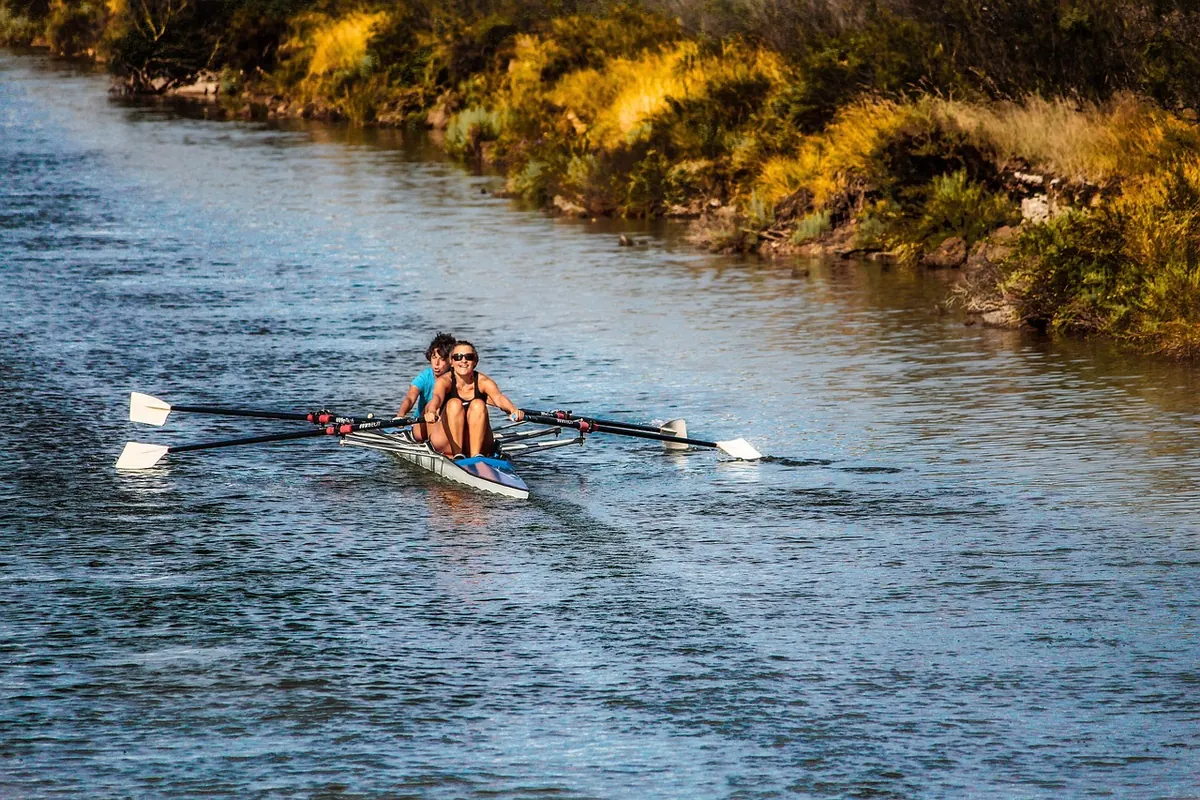
Photo: PICNIC-Foto / Pixabay

All about rowing as a hobby.
Copyright © 2026 Row Hobby. All rights reserved. Row Hobby.